- Tickets. Get the best tickets for NFL, NBA, WNBA, MLB games and more on Tickets MARCA
- NFL. NFL QB rankings: Jaxson Dart lands in Tier 4, behind Bryce Young and Tyler Shough and fans are furious
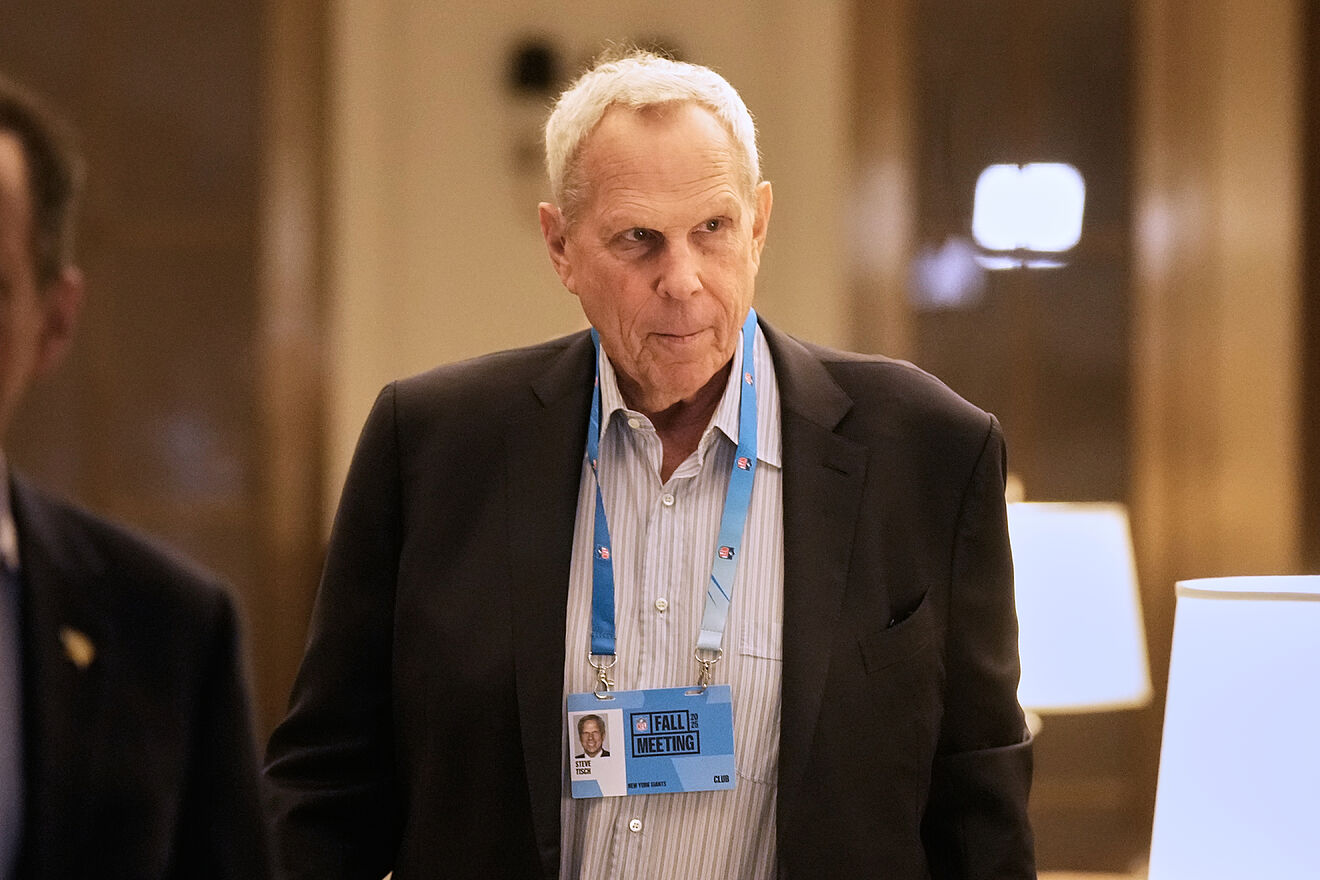
The recent revelations regarding emails exchanged between New York Giants co-owner Steve Tisch and Jeffrey Epstein have sparked intense debate. Some commentators have downplayed the situation, suggesting the messages reflect nothing more than the typical interactions between consenting adults.
But that interpretation misses the broader context entirely. Epstein was not merely connecting friends; he was building and leveraging a network of wealthy and influential men to gain control over young women.
Tisch's name, as a high-profile film producer and NFL co-owner, places him squarely in the sphere Epstein cultivated.
According to reporting from The Athletic, Tisch's claim of a "brief association" with Epstein appears to be at odds with a woman's account shared with Radio France One.
She recalls being introduced by Epstein to an "American producer" in 2013 at a luxurious New York penthouse. Public records indicate Tisch was renting a $60,000-a-month, 13-room residence at Trump Park Avenue during that period.
The woman described being subjected to unwanted advances during the meeting, recalling, "Then he starts to put his hand on the inside of my thighs. I threw out my hand and I said no... He said to me: 'You are a very smart girl.' I ran. I rushed into the elevator. I don't even know how I got myself home." She later received a demeaning call from Epstein the next day.
This behavior is alarming and echoes the alleged tactics of figures like Harvey Weinstein, where career advancement is tethered to sexual compliance. While the actions described may not constitute criminal conduct on their own, they raise serious ethical questions about the environment Epstein fostered and whether Tisch participated in that predatory network.
NFL accountability and the personal conduct policy
The NFL now faces a complex challenge. The league must decide whether it will passively wait for additional reporting to uncover incontrovertible evidence or actively investigate the situation based on the information already available.
Tisch, as a team owner, is subject to the league's Personal Conduct Policy, which holds owners to a higher standard than players.
Whether the NFL chooses to scrutinize his past interactions with Epstein-including examining whether the producer mentioned by the woman in 2013 was indeed Tisch-will send a powerful message about the league's commitment to ethical accountability.
The implications extend beyond Tisch personally. They touch on the NFL's broader culture, demonstrating the difficult balance between legal risk, public perception, and moral responsibility.
By conducting a thorough, independent inquiry, the league could determine whether Tisch's actions, even if not criminal, violated the ethical standards expected of owners. The alternative-inaction-risks eroding public trust and reinforcing the perception that wealth and power shield influential figures from scrutiny.
The broader lesson from the "Epstein files" is clear: time does not erase connections to predatory behavior, and silence does not mitigate accountability. As the story unfolds, the NFL must grapple with whether maintaining its image requires more than statements of concern.
It must decide whether it will actively investigate the allegations, ask hard questions, and ensure that no owner, regardless of influence, operates outside the ethical standards the league professes to uphold.