- Tickets. Get the best tickets for NFL, NBA, WNBA, MLB games and more on Tickets MARCA
- NCAA. Following her controversial divorce, Kristen, Nick Saban's daughter, breaks her silence and introduces the man who brought a smile back to her face
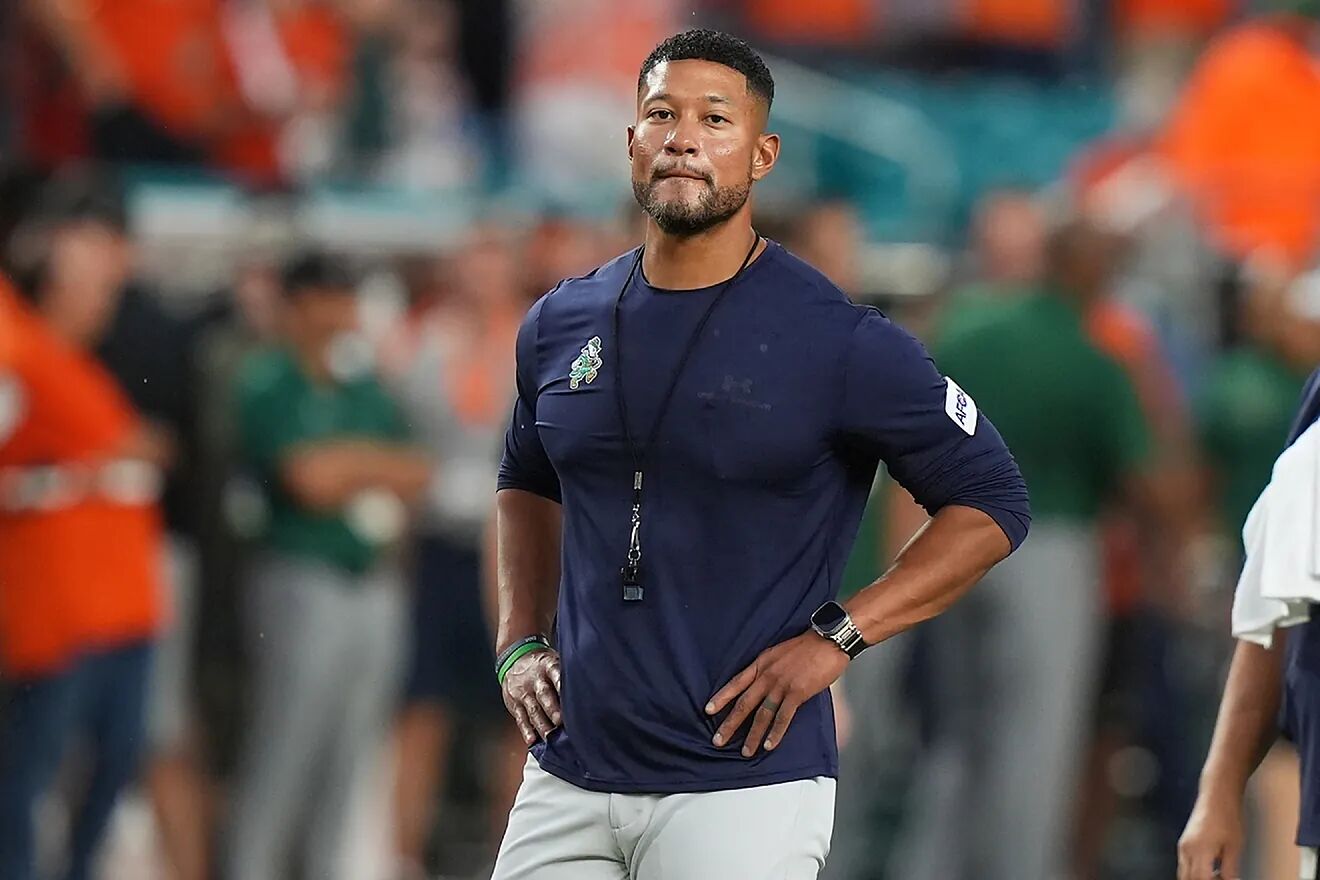
Marcus Freeman has spent the past few seasons reshaping Notre Dame into a steady College Football Playoff contender, but a familiar storyline from his past recently resurfaced, one tied to one of the most scrutinized scandals in modern college football.
Before leading the Fighting Irish, Freeman's coaching path began at his alma mater Ohio State, where he returned in 2010 as a graduate assistant after a decorated playing career.
That same period coincided with the early stages of the program's infamous "Tattoo Gate" investigation, which ultimately led to major NCAA sanctions and the vacating of wins from the 2010 season.
While Freeman was on staff during that time, he was not implicated in any wrongdoing. The violations centered on several Buckeye players receiving improper benefits from a local tattoo parlor owner in exchange for memorabilia.
The fallout would eventually reshape the program's compliance culture and cost the team a postseason appearance.
Freeman recently addressed the topic directly, shutting down any speculation about his involvement.
"I didn't do any of that stuff," said Freeman to Taylor Lewan during his Friday appearance when he was asked if he ever got a tattoo and paid for it.
That clarification reinforces a key distinction in the timeline: Freeman was present in Columbus, but not connected to the violations that involved players trading items such as championship rings and jerseys for cash or discounted services.
Former head coach Jim Tressel ultimately resigned in 2011 after failing to properly report the infractions to the university and NCAA.
From scandal-era Ohio State to Notre Dame leadership
The NCAA response to the scandal was significant, including bowl bans, scholarship reductions, and a multi-year probation period. But for Freeman, the experience became part of a larger coaching education rather than a defining stain on his résumé.
As a player at Ohio State, Freeman also carried a perfect record against rival Michigan, going 3-0 during his tenure from 2006 to 2008.
That rivalry success remains a point of pride in his football background, even as he now operates on the opposite sideline in the Big Ten conversation from afar.
Today, Freeman's focus has shifted entirely to sustaining Notre Dame's national relevance. The Irish finished 11-1 in 2025 but were controversially left out of the College Football Playoff, fueling renewed debate about independent scheduling and strength of resume.
Looking ahead to 2026, questions have surfaced about whether Notre Dame's slate is strong enough to guarantee playoff consideration.
Critics point to the absence of traditional marquee matchups like USC and Michigan in some cycles. Freeman, however, isn't entertaining the narrative.
"Listen, this is our schedule, and it's hard before the season to say what's weak or strong," said Freeman during his appearance on Up and Adams with Kay Adams. "We've got to take care of the opportunities that are presented to us."
He doubled down on that mindset, emphasizing consistency over perception.
"We get twelve guaranteed opportunities," added the coach. "If you don't have gratitude for every one of those 12 games, then it's a lot of work for no reward."
For an independent program like Notre Dame, the path to the playoff rarely comes with shortcuts. Freeman's message is clear: external narratives don't define seasons, execution does.
As he continues building the Irish into a perennial contender, Freeman finds himself balancing past associations, present expectations, and future pressure.
The goal remains unchanged: win the games in front of them and let the rest sort itself out in December.