- New York Yankees. Yankees face internal push to change their most untouchable tradition
- NCAA. Fernando Mendoza's first pitch at Marlins game stuns the world for the wrong reasons
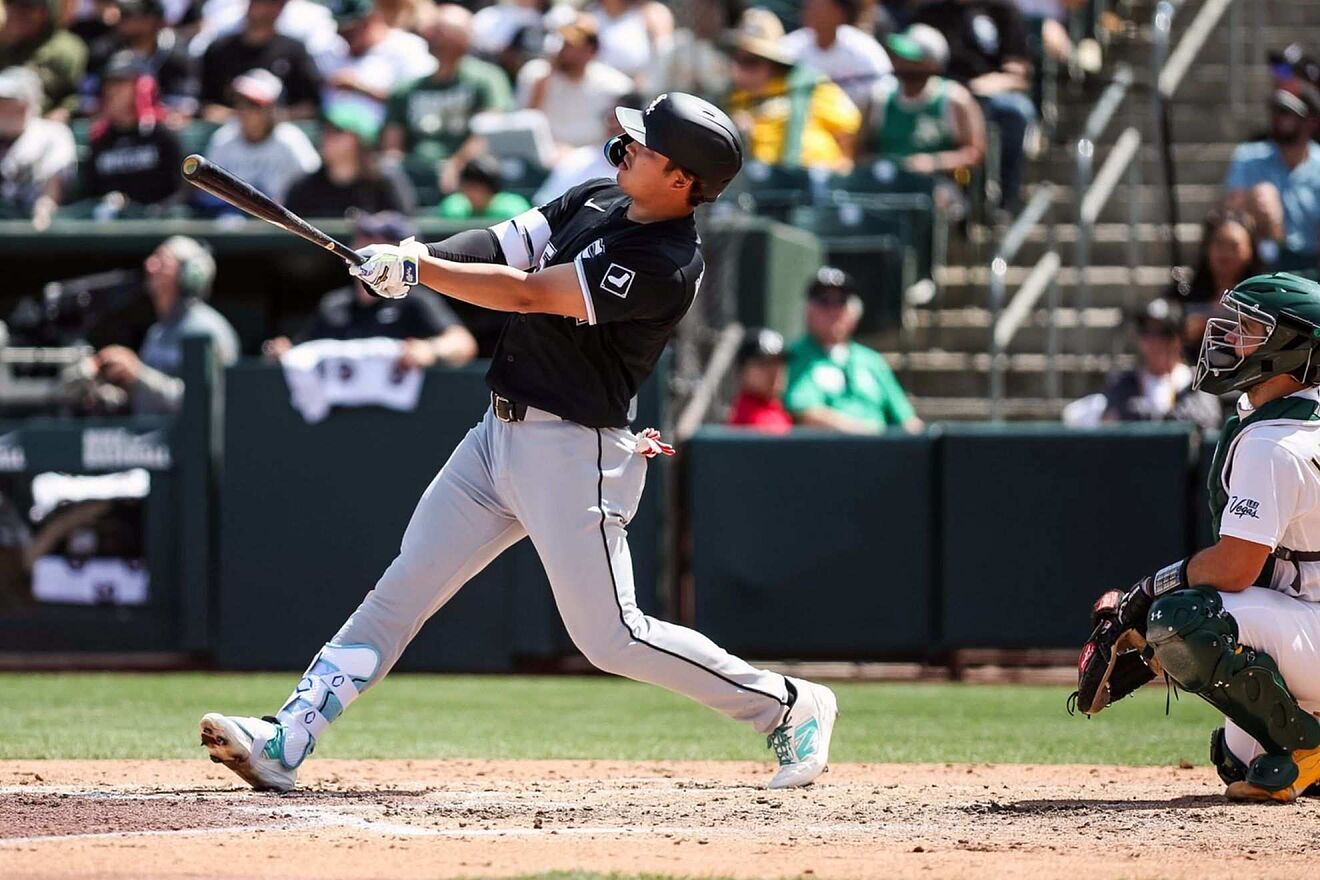
The early signs suggest Munetaka Murakami is exactly what scouts said he would be, and that might be enough to make him the next big Japanese slugger in Major League Baseball.
Entering his rookie season, the book on Murakami was simple: expect a lot of strikeouts, but also expect elite power. His ability to hit home runs was out of the question. Instead, the league wonders if the slugger can do it often enough to offset how frequently he'd swing and miss.
So far, that tradeoff is working. Murakami homered in each of his first three MLB games and later tied a rookie record with home runs in five consecutive games. Only Yordan Alvarez has hit more home runs so far, and Murakami's 168 OPS+ ranks among the top hitters in the league, trailing only names like Alvarez, Mike Trout, Ben Rice and James Wood.
A strikeout rate that could worry some
A strikeout rate north of 30 percent have some fans and analysts questioning Murakami's overall ability. Even though the number jumps out, in today's game it's not disqualifying, especially when paired with elite power and strong plate discipline. Murakami is also walking at a 19.3 percent clip, one of the highest rates in baseball, which helps balance the swings and misses.
His profile fits what's often called the "three true outcomes" hitter. So far, roughly 60 percent of his plate appearances end in a strikeout, walk or home run. That puts him in a category historically associated with hitters like Joey Gallo.
Players with this profile can become elite sluggers if the power holds. The downside is clear, though: if the strikeouts climb too high, the overall production can collapse. But unlike Gallo, whose strikeout rates often pushed past 40 percent, Murakami is currently sitting closer to 30 percent.
Some encouraging signs
He swings less than most power hitters, with a swing rate around 38 percent, which is one of the lowest in the league. His chase rate ranks among the best in baseball, meaning he's not expanding the strike zone unnecessarily. That discipline allows him to draw walks and avoid putting himself in even worse counts, a critical factor for a hitter who already misses at a high rate.
That approach shows up in advanced metrics as well. When Murakami doesn't swing, he's generating significant value by working counts and earning walks. When he does swing, the results are more volatile, which translates inot home runs balanced by whiffs.
Historically, players who produce like this early in a season often develop into high-level hitters. Of the dozens of players who have posted similar combinations of power and strikeouts over a full month, the majority have gone on to make at least one All-Star team. That group includes stars like Trout, Shohei Ohtani and Jim Thome.