- TICKETS. Get the best seats for Sports events at Tickets Marca
- Formula One. The cancellation of the F1 Bahrain and Saudi Arabian GPs is imminent
Mercedes has reclaimed the spotlight-at least for the time being. After George Russell secured his sixth career victory at the Australian Grand Prix, the paddock has shifted its focus to China for the season's first sprint. Russell and the teenage sensation Kimi Antonelli have already locked in a dominant 1-2 for the sprint start, signaling that the Silver Arrows have found a sweet spot in the early 2026 technical regulations.
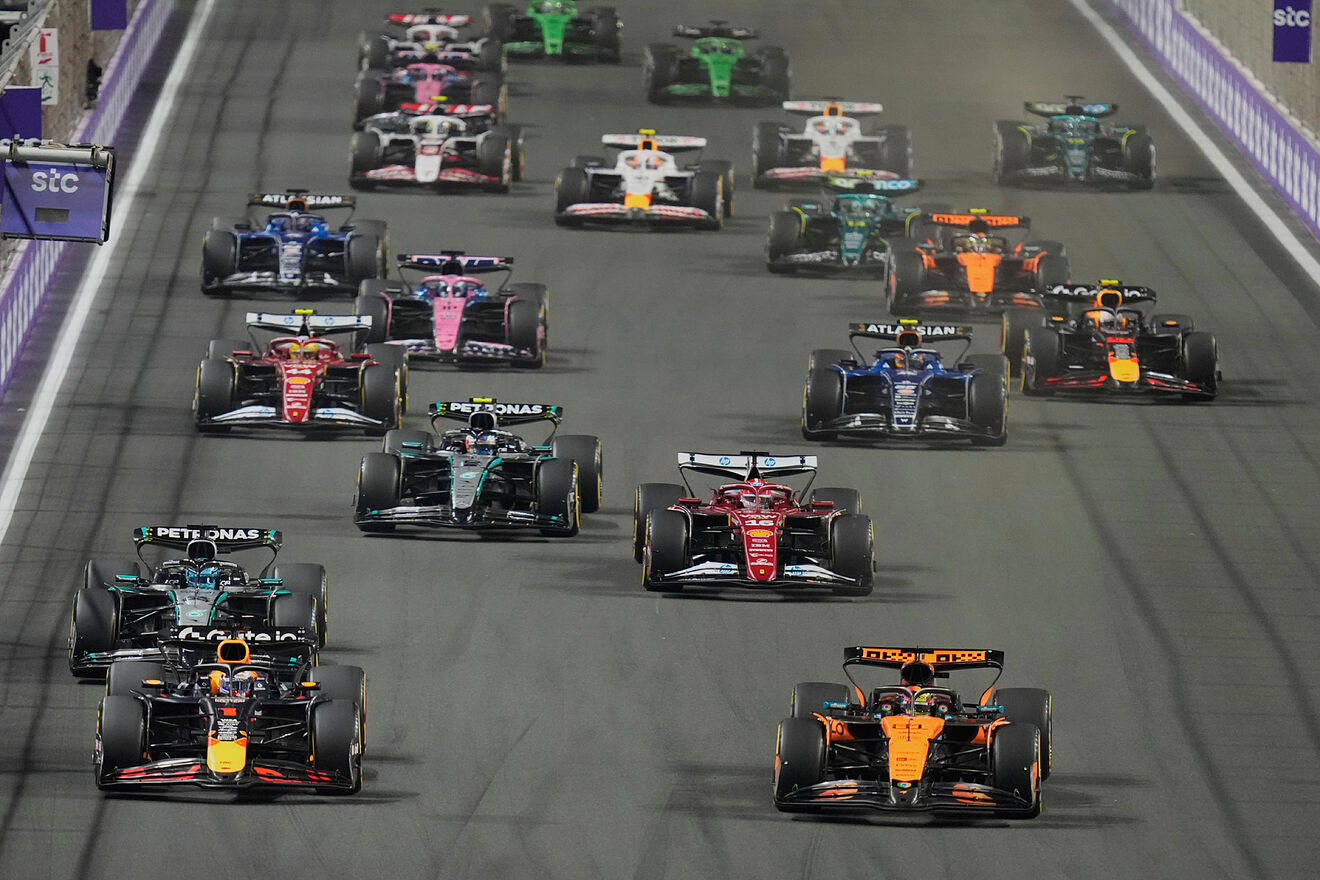
However, as the teams prepare for Suzuka at the end of the month, a massive cloud of uncertainty is hanging over the spring schedule. Due to the escalating conflict in the Middle East, Formula 1 is on the verge of officially pulling the plug on the Bahrain (April 10-12) and Saudi Arabian (April 17-19) Grands Prix, fundamentally altering the flow of the championship.
The 35-Day Hiatus: Impact on the 2026 Championship Fight
An official announcement is expected imminently, and the implications are already rattling the paddock: fans are looking at a staggering 35-day gap between the Japanese GP on March 29 and the Miami GP on May 3.
While this leaves a massive void for spectators, it provides a crucial lifeline for teams that have stumbled out of the gates. Specifically, Cadillac and Red Bull have both been vocal about their car's early-season deficiencies, and this unintended "spring break" offers a month-long window to fast-track major aerodynamic upgrades that would normally take half a season to implement.
Crucially, the FIA does not plan to relocate these races or move other events forward, officially trimming the 2026 calendar down to 22 rounds. This reduction isn't just a sporting shift; it's a major financial blow.
Dropping two of the highest-revenue flyaway races on the schedule without immediate replacements will create a significant dent in the sport's commercial bottom line, though the logistical impossibility of finding short-term substitutes made this the only viable path for Stefano Domenicali and the FOM.
Regional Conflict and the Long-Term Future of the Gulf Grands Prix
Speculation regarding the fate of the Middle Eastern leg has been brewing since the conflict erupted on February 28. With military strikes involving the United States and Israel targeting Iran, the region has transitioned into a high-risk zone for international sporting events. The subsequent closure of various airspaces has crippled travel logistics, making the transport of F1's massive freight operations physically impossible for the time being.
Local authorities have reported over 1,000 civilian casualties following the strikes that claimed the life of Iran's supreme leader, and the instability shows no signs of waning. This has led many within the paddock to wonder if the 2026 cancellations are just the beginning.
With no clear timeline for a resolution, there is a growing concern that these two cornerstone races may face multi-year absences, forcing Formula 1 to fundamentally reconsider its long-term reliance on the Gulf region for its season-opening strategy.