- TICKETS Get the best seats in sports in Tickets MARCA
- Celebrity net worth Jordan Stolz net worth: the American speed skater's fortune after his second gold at the Winter Olympics.
- Olympic Games Lindsey Vonn cries again: her sister Karin Kildow sends an emotional message after her serious injury
What was supposed to be a calm competition at the Milano-Cortina 2026 Winter Olympics has turned into an unexpected stage of tension. Curling, traditionally associated with courtesy and fair play, is going through a week marked by suspicions that have completely altered the Olympic atmosphere. The discipline, which usually progresses without incident, now finds itself at the center of a debate that grows with each passing day.
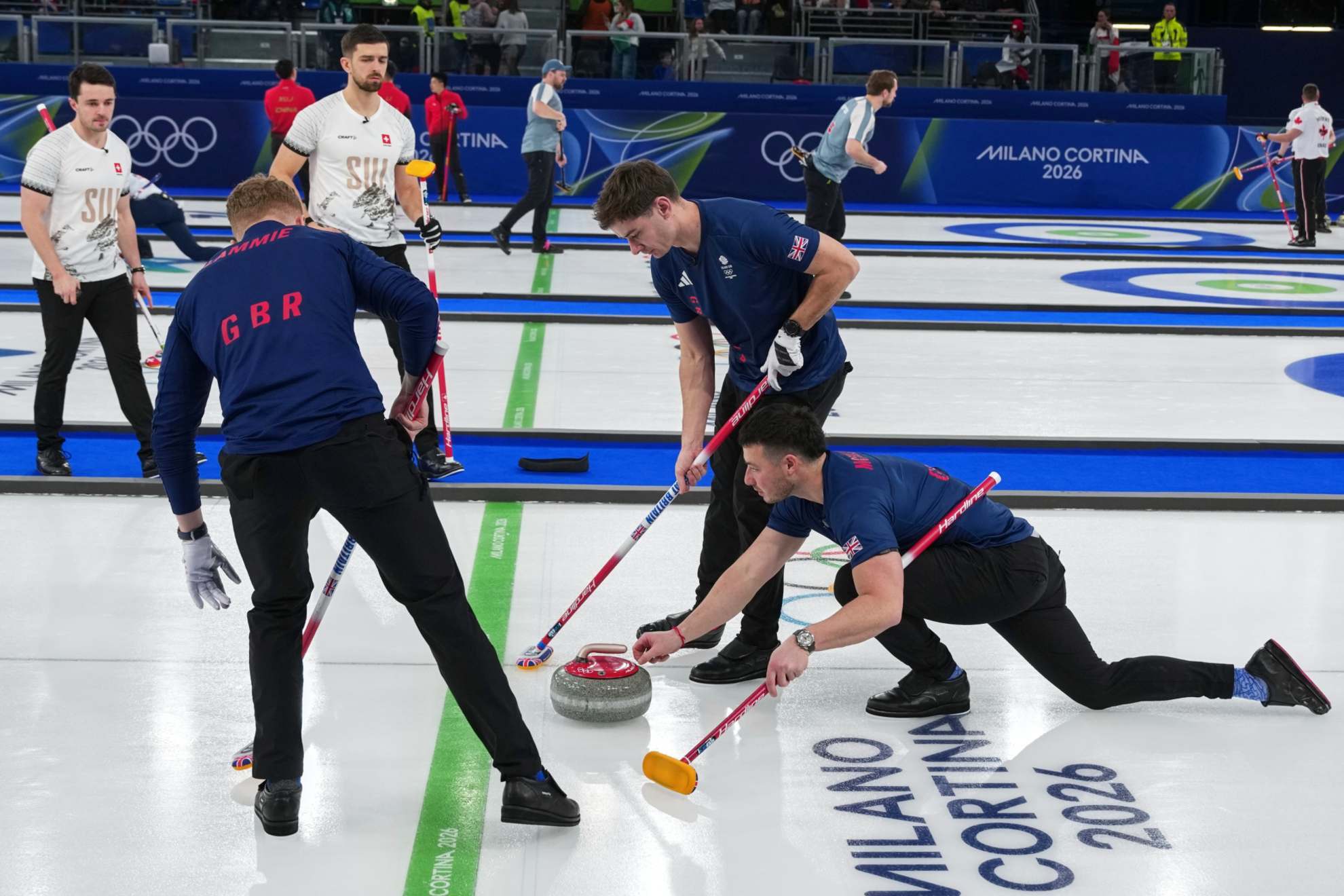
The most recent episode occurred this Sunday, when the reinforced monitoring system detected an irregularity in the middle of a match. In the ninth end of the game that Great Britain won 9-4 against Germany, officials invalidated a stone delivered by Bobby Lammie. The decision was based on the fact that the Scottish player allegedly touched the stone after releasing it, an action known as double-touching and prohibited by the rules.
Until then, accusations of misconduct had fallen solely on Canada, which had been flagged in two consecutive matches: first against Sweden in the men's event and then against Switzerland in the women's competition. The sanction against Lammie, however, made it clear that scrutiny is not limited to a single country and that officiating pressure extends across the entire tournament.
Officiating that changes course
The World Curling Federation has failed to convey clarity. After the initial incidents, it decided to increase the number of officials across the four active sheets. But in a decision that surprised everyone, the governing body announced that same Sunday that referees would only intervene if teams requested it, discarding the constant monitoring system implemented just hours earlier.
This sudden shift reignited a debate that curling has avoided for years: the incorporation of technological tools. Unlike other Olympic sports, the discipline does not use video replay to review controversial plays, a situation that has divided its protagonists.
- The conservative stance, represented by Sweden's Johanna Heldin, defends the sport's traditional essence and fears that video review would disrupt its natural rhythm.
- The opposing view, promoted by Americans Tara Peterson and Tabitha Peterson, considers it essential to adopt technology to guarantee more accurate decisions.
While Great Britain and Canada insist there was no intent to deceive, the shadow of doubt stretches across the competition. With several days of action still ahead, curling is experiencing a moment that could redefine its future.