- Tickets MARCA. Want tickets for the Super Bowl? Check here to see for any last-minute seats on Tickets MARCA
- NFL. Patriots issue Drake Maye health update days before Super Bowl LX
- NFL. Jimmy Kimmel takes aim at Bill Belichick's Hall of Fame snub and relationship with Jordon Hudson
The confetti falls every February, but for some franchises it never lands on their sideline.
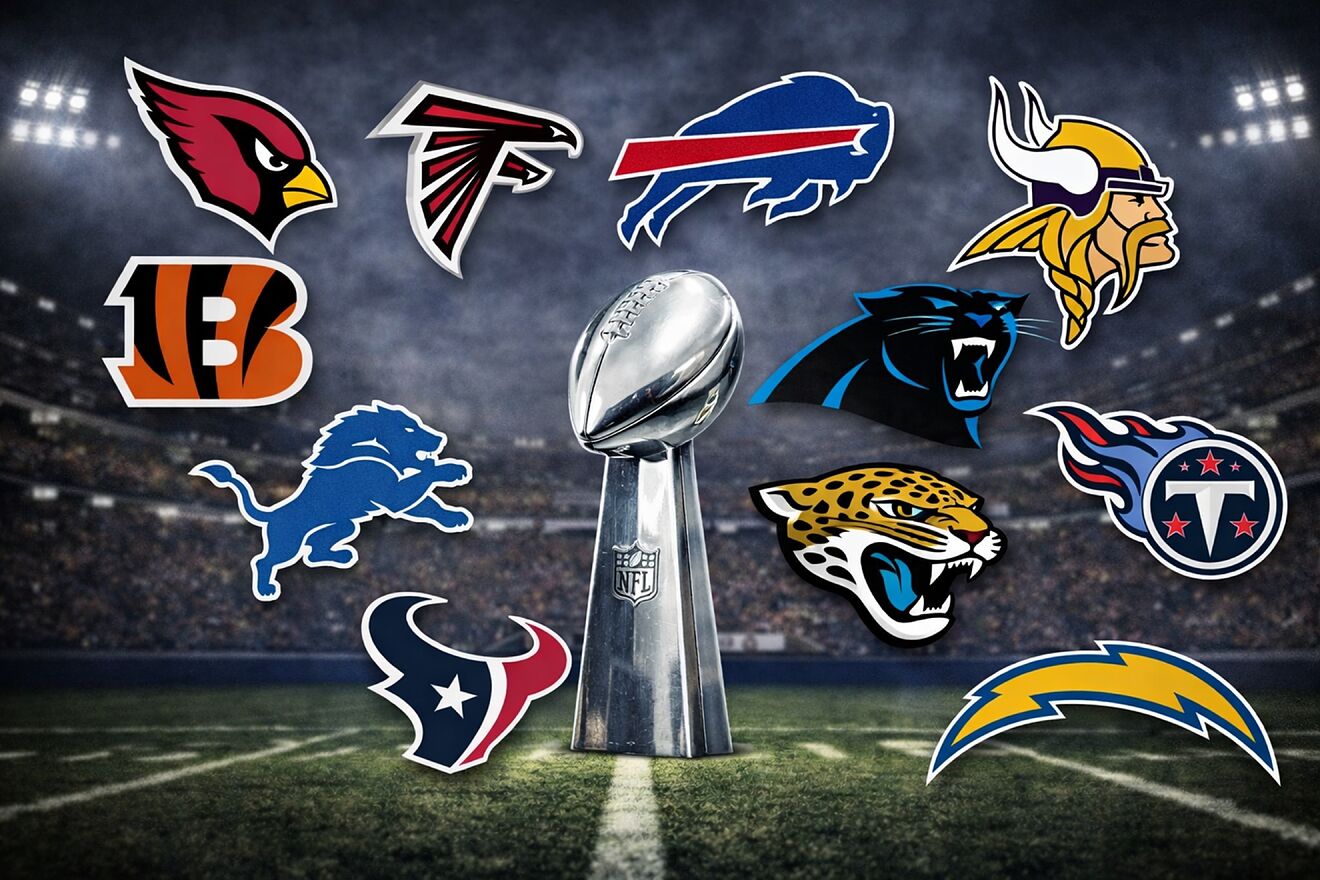
As the Super Bowl reaches its 60th edition in Santa Clara, California, 12 of the NFL's 32 teams have still never won the Lombardi Trophy, a verified fact that continues to define the league's competitive imbalance.
Since the Super Bowl era began in 1967, seven franchises have captured 34 of the first 59 championships, according to official NFL records and Pro Football Reference. The Patriots and Steelers lead with six titles each, followed by the Cowboys and 49ers with five, and the Giants, Packers, and Chiefs with four. That dominance has repeatedly closed the window on teams peaking at the wrong time.
Related:
- Super Bowl 2026: Date, time, location, and everything to know
- Where to watch the Super Bowl 2026? TV channel and streaming
- Super Bowl Halftime Show 2026: Everything about Bad Bunny's performance
- How much do tickets for the Super Bowl cost in 2026?
- Super Bowl Winners List: All teams that have won the Vince Lombardi
These teams have never won the Super Bowl:
- Arizona Cardinals
- Atlanta Falcons
- Buffalo Bills
- Carolina Panthers
- Cincinnati Bengals
- Cleveland Browns
- Detroit Lions
- Houston Texans
- Jacksonville Jaguars
- Los Angeles Chargers
- Minnesota Vikings
- Tennessee Titans
Four of these teams have never even appeared in a Super Bowl: the Browns, Texans, Lions, and Jaguars.
Close calls and defining moments
Several of the ringless teams came within a few plays of history. The Buffalo Bills reached four consecutive Super Bowls from 1990 to 1993, losing all four, an outcome unmatched in league history. The Atlanta Falcons led Super Bowl LI by 28-3 before falling in overtime, a collapse still referenced by analysts as the defining comeback of the modern era.
The Minnesota Vikings lost four Super Bowls between 1969 and 1976 and later fell in multiple NFC Championship Games, becoming the league's most consistent contender without a title.
Other franchises were undone by moments frozen in time. The Tennessee Titans were stopped one yard short as time expired in Super Bowl XXXIV. The Cincinnati Bengals lost two Super Bowls to Joe Montana in the 1980s, then fell again in Super Bowl LVI despite a late fourth-quarter push.
Long droughts and structural challenges
Not every case comes down to one night. The Arizona Cardinals, founded in 1920, have just one Super Bowl appearance and a historically low winning percentage. The Cleveland Browns and Detroit Lions dominated the 1950s but struggled after the AFL-NFL merger. Detroit's blown lead in the 2023 NFC Championship Game kept them as the only NFC team never to reach a Super Bowl.
Expansion teams tell a different story. The Houston Texans, established in 2002, have made the playoffs nine times but have never reached a conference championship game. The Jacksonville Jaguars and Carolina Panthers reached title games early, only to be blocked by dynasties.
Why this anniversary feels different
League analysts from ESPN and NFL Network point to the modern salary cap, draft structure, and free agency as tools that have shortened rebuilds. Recent postseason runs by Detroit, Jacksonville, and Houston suggest the gap is narrowing compared with previous decades.
Several of these teams now enter upcoming seasons with young quarterbacks, stable front offices, and recent playoff momentum. History suggests that first championships follow sustained contention rather than sudden spikes. As the Super Bowl enters its seventh decade, the question is no longer about getting close, but about finally finishing the job.
Championship totals and postseason appearances were verified using official NFL records, Pro Football Reference, ESPN Stats & Info, and NFL Network historical summaries. Data reflects results through the 2024 NFL season.