- NFL The Dolphins have ten days to get rid of Tua Tagovailoa and avoid an even more ruinous deal
- NFL Alix Earle is still hurting over Braxton Berrios: Tears caused by Taylor Swift after seeing him for the first time since their breakup
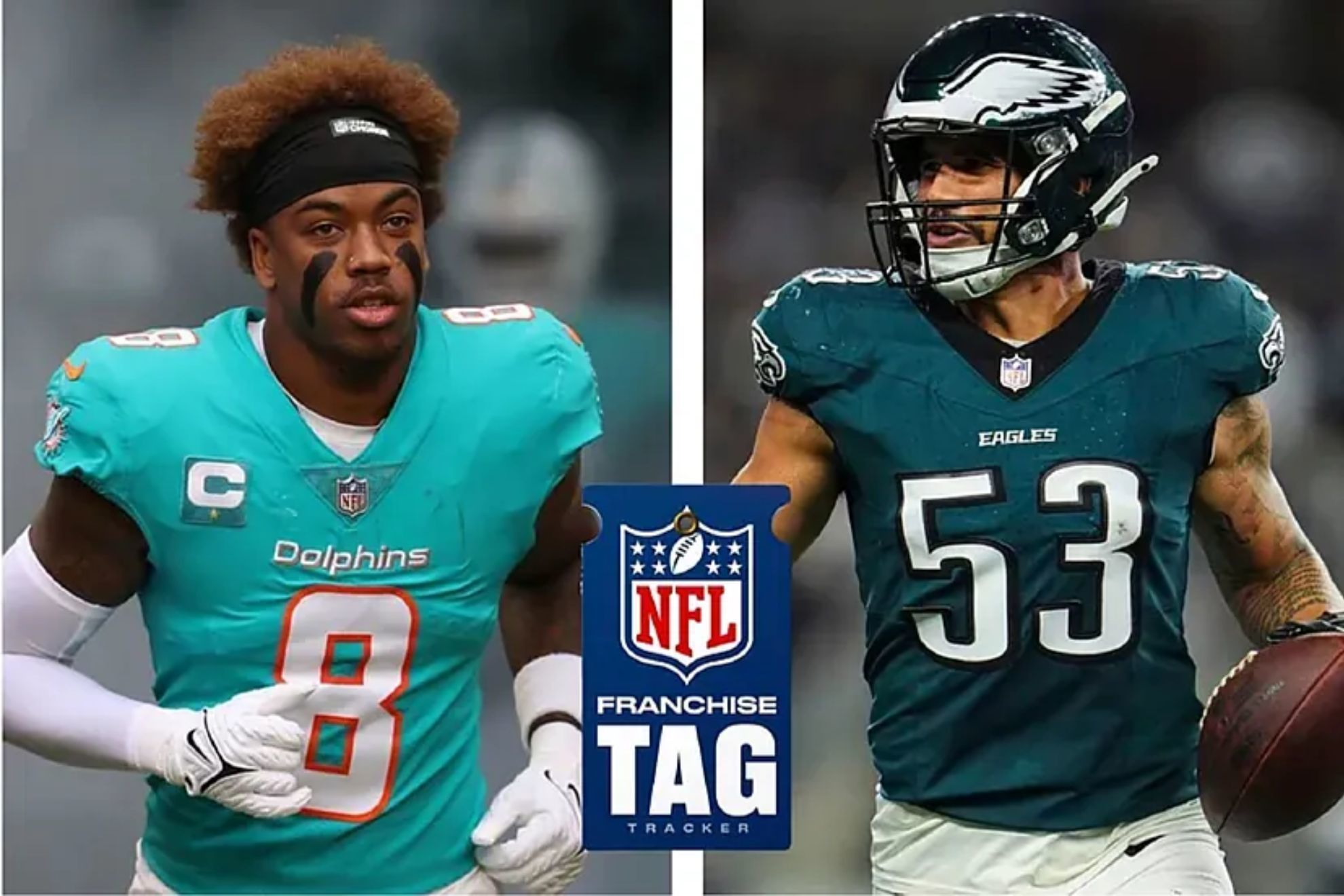
The NFL offseason has reached its first major strategic crossroads. Since Tuesday, February 17, general managers across the league weew looking at their rosters with one question in mind: who is too valuable to let go? The franchise tag window is almost closed and teams have until March 3 at 4 p.m. ET to decide if they will use this powerful-and expensive-tool to keep a key player from hitting the open market.
How the franchise tag works in 2026
At its heart, the franchise tag is a "safety net" for teams. It allows a club to retain a player scheduled to become an unrestricted free agent by offering them a one-year, fully guaranteed contract. For the players, it offers a massive payday but lacks the long-term security of a multi-year extension.
There are three versions of the tag that teams can use:
- Non-Exclusive Tag: The most common choice. The player can talk to other teams, but his current team can match any offer. If they don't, they receive two first-round draft picks as compensation.
- Exclusive Tag: Reserved for the elite (usually QBs). The player cannot negotiate with anyone else. The salary is based on the average of the top five salaries at the position for the current year.
- Transition Tag: A slightly cheaper option that gives the team the right to match any outside offer, but provides no draft picks if the player leaves.
Why do teams use the franchise tag?
Teams use the franchise tag for several strategic reasons:
- Retaining star players while negotiating long-term deals.
- Gaining extra time to assess a player's health, production, or value before committing long-term.
- Preventing free agency departures that could weaken their roster.
- Maximizing trade value, as teams sometimes tag a player and then trade them rather than lose them for nothing.
How long can a team tag a player?
A team can tag a player for a maximum of three consecutive years, but the financial implications make it impractical beyond two years in most cases. Here's why:
- The first year a player is tagged, they receive a salary based on the average of the top five players at their position.
- The second year, they receive 120% of their previous year's salary.
- The third year, the cost jumps to 144% of the previous year's salary or the highest-paid QB salary (whichever is greater), making it financially unfeasible.
Key 2026 dates and salary projections
The clock is ticking for both sides. If a player is tagged by the March 3 deadline, the team and the player's agent then have until July 15 to negotiate a long-term contract extension. If no deal is reached by then, the player must play the 2026 season under the one-year "tag" amount.
- Quarterback: $47,321,000 (Franchise) / $40,799,000 (Transition)
- Wide Receiver: $28,824,000 (Franchise) / $25,029,000 (Transition)
- Defensive End: $27,322,000 (Franchise) / $22,908,000 (Transition)
- Offensive Line: $27,924,000 (Franchise) / $25,305,000 (Transition)
- Cornerback: $21,414,000 (Franchise) / $17,951,000 (Transition)
- Tight End: $16,319,000 (Franchise) / $13,869,000 (Transition)
- Running Back: $14,536,000 (Franchise) / $11,728,000 (Transition)
- Kicker/Punter: $6,900,000 (Franchise) / $6,240,000 (Transition)
Big names to watch this window
Several stars are currently at the center of the "tag" conversation. In Dallas, wide receiver George Pickens is a primary candidate after a career-best season, while the Atlanta Falcons are weighing the nearly $16.3 million cost to keep tight end Kyle Pitts in the fold. For these players, the next two weeks will determine if they are heading for a big extension or a high-stakes one-year bet.
As the window closes on March 3, the leverage shifts. Teams often wait until the final hours to apply the tag, using it as a "soft threat" to encourage long-term talks. Whatever happens, the decisions made this fortnight will reshape the 2026 free agency landscape that officially begins on March 11. Data based on 2026 NFL salary cap projections and official league schedule.